Samsung’s African smartphone lead rests on growth, financing and after-sales reach

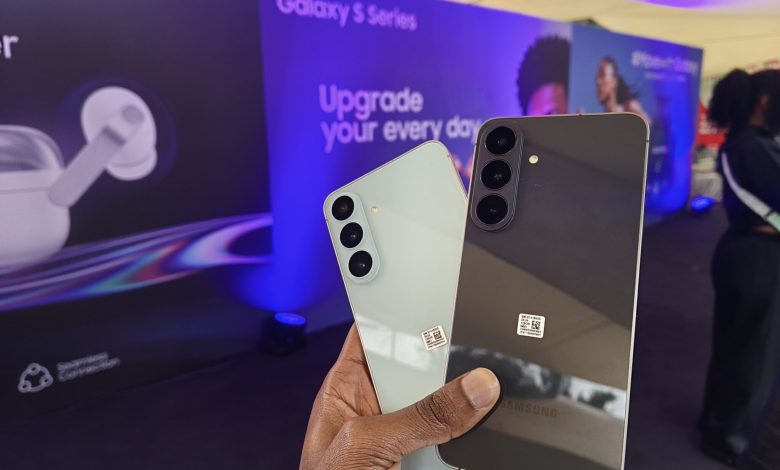
Samsung has taken the lead in Africa’s smartphone market after recording a sharp increase in sales during the second quarter of 2026, with flexible instalment payments helping the South Korean manufacturer reach consumers who face difficulties paying for devices upfront.
According to market research firm TechInsights, Samsung ranked first in smartphone revenue in Africa during the first quarter, before taking the top position in both revenue and unit sales in the second quarter. Its smartphone unit sales increased 34.8% year-on-year during the period, even as total smartphone sales across the African market declined 16.6%.
Samsung’s performance marks a significant change in its position on the continent. The company held a 22.4% share of Africa’s smartphone unit sales in 2024, rising to 26.5% in 2025. TechInsights’ full-year 2026 forecast puts its share at 38.7% by volume and 34.5% by sales value, figures that would place it ahead of other smartphone manufacturers in both measurements.
The growth comes as manufacturers contend with a market where affordable devices account for a substantial portion of demand. Samsung has traditionally faced competition from Chinese smartphone brands with strong distribution networks and products targeting consumers who prioritise purchase price.
Flexible instalments help Samsung reach more African consumers
Samsung’s approach to affordability has centred on changing how customers pay for smartphones. The company says 46% of its smartphone revenue in Africa this year came through a customised instalment programme that allows customers to make daily or weekly payments instead of committing to larger monthly instalments or paying the full device price upfront.
The arrangement addresses a particular challenge in African consumer markets, where many people earn daily wages, weekly payments or irregular incomes rather than receiving predictable monthly salaries. Samsung says monthly incomes across the region range from approximately $100 to $500, while some of its Galaxy A smartphones cost around $200. For consumers operating within those income levels, the upfront cost can make even a relatively affordable smartphone difficult to purchase.
Smaller repayments allow customers to spread the purchase cost across periods that better reflect how they receive their income. The contribution of the programme to Samsung’s African smartphone revenue suggests that payment flexibility has become an important part of its sales strategy, particularly among consumers who might otherwise consider lower-priced alternatives.
The approach also connects with financing arrangements already operating in Kenya. In May 2026, Samsung introduced the Galaxy A57 and A37 alongside the LOOP FLEX buy-now-pay-later programme, which offered customers financing with an upfront deposit starting at 10% and repayment periods ranging from three to 12 months. The arrangement also included device protection backed by bolttech.
Other manufacturers and financing companies are pursuing similar opportunities. In November, Mogo partnered with ZTE and Kenyan distributor RSC to offer smartphones with deposits starting at KSh100, allowing customers to repay the remaining balance through daily instalments over periods of up to 12 months. Mogo said it had served more than 400,000 customers through smartphone financing since entering the Kenyan market.
Transsion, whose brands include TECNO, Infinix and itel, has also benefited from distribution and financing arrangements targeting consumers who cannot afford full upfront payments. Safaricom’s Lipa Mdogo Mdogo programme, for example, has helped deliver affordable 4G smartphones through partnerships involving Transsion brands.
These developments show why financing has become an important competitive consideration for smartphone manufacturers operating in Africa. Samsung is bringing its financing proposition to a market where competitors already have established relationships with retailers, mobile operators and
consumers seeking lower-cost devices.
Premium smartphone sales rise alongside affordability efforts
Samsung’s growth is also extending into higher-priced devices, with the company reporting a 20% year-on-year increase in sales of its Galaxy S and Z series smartphones in Africa this year.
The performance suggests that its financing strategy is supporting demand beyond entry-level and midrange devices. Customers who might previously have been unable to afford more expensive models can spread payments over time, making Samsung’s premium portfolio accessible to a broader group of buyers.
This is relevant to Samsung’s wider product strategy, particularly as the company seeks to maintain its position across different price categories. Its Galaxy A range serves consumers looking for more affordable smartphones, while the Galaxy S and Z families target buyers interested in higher-end specifications and features.
In Kenya, Samsung’s Galaxy A18 and A08 launches in October also demonstrated its continued attention to lower-priced devices. The phones arrived at recommended prices of KSh32,000 and KSh23,300 respectively, with six generations of operating system upgrades and six years of security maintenance releases.
The extended software commitments give customers a longer period of supported use, which can influence the overall value of a device beyond its purchase price. Samsung has also been promoting its Knox security platform across its smartphone portfolio, positioning device protection as an important consideration for consumers who rely on their phones for financial transactions.
Security and after-sales support strengthen Samsung’s proposition
Samsung’s African strategy also reflects the role smartphones play in everyday financial activity. According to the GSMA, mobile money transactions in sub-Saharan Africa reached $1.4 trillion last year, representing approximately two-thirds of global transaction value.
Mobile money has become an important part of how consumers receive income, pay for goods and
services, transfer funds and manage household expenses. Samsung argues that this makes smartphone security particularly important because a compromised device can expose financial accounts and transactions to fraud.
The company has therefore emphasised long-term software support and Samsung Knox security as part of its competitive proposition. Samsung says eligible Galaxy A devices offer up to seven years of operating system and security updates, giving customers access to supported software over an extended ownership period.
Its after-sales network has also expanded to 281 locations across 38 African countries. The company is combining this infrastructure with services such as Samsung Care+, which offers eligible customers protection against accidental screen damage and other device-related incidents.
In September, TechTrends reported Samsung Care+ screen-repair pricing across Kenya, Tanzania, Uganda and Ethiopia. The programme included repair charges for selected Galaxy A, S and Z models, giving customers an additional option for managing the cost of accidental damage.
The strategy is relevant in markets where replacing a damaged smartphone can represent a substantial household expense. Longer software support, accessible repair services and financing arrangements give Samsung several ways to address the cost of owning a smartphone rather than concentrating entirely on its initial retail price.
Rising component costs complicate Samsung’s growth strategy
Samsung’s African market gains come against a difficult operating environment for smartphone manufacturers. Higher memory prices have put pressure on production costs, affecting the affordability of devices across the industry.
TechTrends reported in June that Africa’s smartphone shipments declined 12% year-on-year in the first quarter of 2026, citing Counterpoint Research. The report linked the contraction to higher memory costs and pressure on smartphone prices, particularly in the lower-priced segments where consumers are more sensitive to increases.
Samsung’s position improved during the period, with the company overtaking TECNO in Counterpoint’s shipment rankings. The subsequent second-quarter figures cited by Samsung show further growth in its sales, even as the wider market contracted.
However, rising component costs are also affecting Samsung’s product strategy. A November 2 TechTrends report indicated that Samsung was preparing to reduce Galaxy A production in 2027, following cuts to its original production plans for the fourth quarter of 2026. The Galaxy A family accounts for a substantial portion of the company’s smartphone shipments, making its production decisions particularly relevant to its presence in price-sensitive markets.
The pressure creates a commercial challenge for Samsung. Its African growth strategy depends partly on reaching customers who need affordable devices and flexible payment arrangements, while higher production costs can make it harder to maintain competitive prices in those segments.
Samsung’s reported performance nevertheless shows that its combination of financing, software support, device security and premium products is finding customers in a market where manufacturers are competing for consumers with very different purchasing capacities. Its next challenge will be sustaining that growth while maintaining a strong presence across the price categories that underpin smartphone adoption in Africa.
Go to TECHTRENDSKE.co.ke for more tech and business news from the African continent and across the world.
Follow us on WhatsApp, Telegram, Twitter, and Facebook, or subscribe to our weekly newsletter to ensure you don’t miss out on any future updates. Send tips to editorial@techtrendsmedia.co.ke
